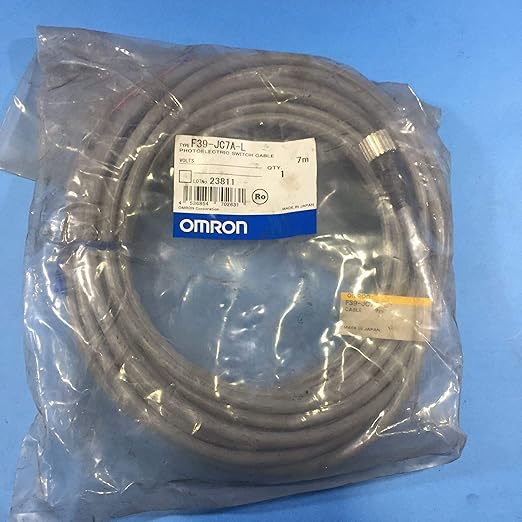
Description
Omron Corporation F39-JC7A-L Photoelectric Switch Cable – Q&A
The Omron F39-JC7A-L is a photoelectric switch cable designed for use with photoelectric sensors to detect the presence or absence of objects, enabling automation systems to function efficiently. These types of sensors use light to detect objects without making physical contact, and the F39-JC7A-L is typically used in applications where precise detection is essential, such as in manufacturing, packaging, and sorting systems.
Let’s explore the pros and cons of the Omron F39-JC7A-L Photoelectric Switch Cable:
Q1: What are the main advantages of the Omron F39-JC7A-L Photoelectric Switch Cable?
Pros:
- Durability:
- The F39-JC7A-L is built to last with high-quality materials designed to withstand harsh industrial environments. It can operate effectively in high-vibration conditions, making it suitable for heavy machinery and other demanding environments.
- High Precision:
- As part of a photoelectric sensor system, the F39-JC7A-L allows for high-precision detection, which is ideal for applications that require accurate object detection, such as in sorting or assembly lines.
- Longer Cable Length:
- The cable is relatively long, allowing for greater flexibility when setting up sensors in large or spread-out installations. This reduces the need for extensions or additional cabling, making it easier to integrate into existing systems.
- Ease of Integration:
- The F39-JC7A-L is compatible with a wide variety of photoelectric sensors from Omron, making it easy to integrate into existing automation systems. The design is user-friendly, and installation typically doesn’t require specialized training or expertise.
- Versatile Applications:
- The cable can be used in a wide range of industrial applications, including conveyor systems, robotics, material handling, and packaging machinery. Its versatility makes it a valuable component in any automated system.
- Resistance to Environmental Factors:
- The cable is designed to resist oil, dust, moisture, and extreme temperatures, making it a reliable option in industrial and outdoor environments. This resistance to environmental factors increases the longevity and operational efficiency of the system.
- Noise Immunity:
- The F39-JC7A-L cable offers good electrical noise immunity, which helps in reducing errors caused by external electrical interference. This makes it particularly useful in high-noise environments, such as in factories or warehouses with a lot of equipment.
- Cost-Effective:
- For the performance and durability it provides, the Omron F39-JC7A-L is generally considered cost-effective compared to other photoelectric cables in the market, offering good value for money in industrial applications.
- Pre-Wired for Convenience:
- The F39-JC7A-L comes with a pre-wired configuration, which reduces setup time and minimizes errors during installation. This is particularly beneficial for businesses looking to quickly deploy systems without extensive manual work.
Q2: What are the potential drawbacks or limitations of the Omron F39-JC7A-L Photoelectric Switch Cable?
Cons:
- Limited Cable Length:
- While the cable is generally long, some users may find that the available lengths may not be suitable for very large installations or systems where extra-long cables are necessary. Users may need to invest in extensions or other solutions for more expansive setups.
- Limited Range for Detection:
- The F39-JC7A-L cable is designed for specific types of photoelectric sensors, which means it may not support the long-range detection capabilities of more advanced models or other sensor technologies. If a longer detection range is needed, a different sensor cable or system may be required.
- Requires Compatible Sensors:
- The F39-JC7A-L is specifically designed for use with Omron photoelectric sensors, meaning it may not be compatible with sensors from other manufacturers. This limits flexibility for businesses that use a variety of sensors from different brands.
- Potential for Cable Damage:
- While the cable is resistant to environmental factors, prolonged exposure to extreme conditions or improper handling (such as excessive bending or pulling) can lead to wear and tear over time. Proper installation and maintenance are required to avoid damage.
- Not Suitable for High-Speed Applications:
- The F39-JC7A-L may not be the best choice for high-speed detection tasks. For operations that require rapid switching or high-frequency sensing, other photoelectric sensor cables designed for higher speeds might be more appropriate.
- Potential Compatibility Issues with Older Systems:
- If integrating the cable into older systems or equipment, compatibility could be a concern, as earlier Omron systems may require different connectors or wiring methods. Users may need to check the system specifications for compatibility with the F39-JC7A-L.
- Risk of Overloading:
- The photoelectric switch cable and associated sensors can be at risk of overloading if excessive voltage or current is applied. Proper wiring and voltage regulation are required to ensure that the system operates within the rated limits.
- Shorter Lifespan Under Extreme Conditions:
- While durable, the F39-JC7A-L is not designed to operate in extreme or highly specialized conditions (e.g., extremely high temperatures, corrosive environments, or exposure to intense mechanical stress). In such cases, it might wear out faster compared to more industrial-grade options.
Q3: How does the Omron F39-JC7A-L compare to other photoelectric switch cables in the market?
Comparison:
- Omron F39-JC7A-L vs. Pepperl+Fuchs Photoelectric Cables:
- Pepperl+Fuchs is another leading manufacturer of photoelectric sensors and cables. While Omron cables, like the F39-JC7A-L, offer great reliability and ease of use, Pepperl+Fuchs cables may offer higher flexibility in terms of customizability, especially for complex installations. However, Omron’s products are generally known for their superior durability and ease of integration.
- Omron F39-JC7A-L vs. Sick Photoelectric Cables:
- Sick also produces high-quality photoelectric cables. Sick cables typically have slightly higher performance thresholds, with greater emphasis on precision sensing and long-range detection. However, Omron F39-JC7A-L offers a cost-effective solution for businesses seeking solid performance at a lower price point.
- Omron F39-JC7A-L vs. Banner Engineering Photoelectric Cables:
- Banner Engineering offers photoelectric cables that are similar in functionality to Omron’s F39-JC7A-L, with both options providing solid protection against environmental factors and excellent noise immunity. Banner tends to focus more on specialized applications (such as in food processing or hazardous environments), while Omron provides more universal solutions for general industrial automation.
Q4: How do I install and maintain the Omron F39-JC7A-L Photoelectric Switch Cable?
Installation Tips:
- Check Compatibility:
- Ensure that the F39-JC7A-L is compatible with the Omron sensor model you’re using. Verify the connection type and the sensor’s operational specifications to prevent installation issues.
- Ensure Proper Cabling:
- During installation, ensure that the cable is routed properly and is not subject to mechanical stress. Avoid sharp bends and keep the cable away from potential sources of electrical interference to ensure optimal performance.
- Secure Mounting:
- Securely fasten the photoelectric sensors and cable in place to prevent vibrations from loosening connections or causing issues. If necessary, use cable ties or conduit to keep the cable organized and out of harm’s way.
- Prevent Exposure to Extreme Conditions:
- While the cable is resistant to various environmental factors, avoid exposing it to extreme chemicals, solvents, or high heat for extended periods. Make sure to use protective covers or additional shielding in such conditions.
- Routine Maintenance:
- Periodically inspect the F39-JC7A-L cable for signs of wear and tear or damaged insulation. Replace any damaged cables promptly to avoid operational disruptions.
- Check Sensor Calibration:
- Regularly check the calibration of the connected photoelectric sensor to ensure it’s functioning at its optimal detection range and sensitivity.
Q5: What are some common applications for the Omron F39-JC7A-L Photoelectric Switch Cable?
Common Applications:
- Automated Sorting Systems:
- The F39-JC7A-L is often used in automated sorting systems, where it helps detect items on conveyor belts, ensuring the correct sorting of goods based on size, shape, or type.
- Robotic Arm Control:



Reviews
There are no reviews yet.